A Beginner's Guide to French New Wave Cinema: From Breathless to 400 Blows
A considered reading of the story, craft, context, and questions behind the screen.
Job Overview & Historical Context In the late 1950s and early 1960s, a rebellious group of young film critics writing for the influential Parisian journal *Cahiers du Cinéma* decided to stop writing about movies and start making them. This artistic upheaval became known as the French New Wave (*La Nouvelle Vague*). Rejecting the bloated, formulaic historical costume dramas favored by the traditional French studio establishment, these young filmmakers championed the 'Author Theory' (*Auteur*)—the belief that the director is the true primary author of a film. This comprehensive beginner's guide explores the landmark masterpieces, rebellious techniques, and lasting legacy of the French New Wave.
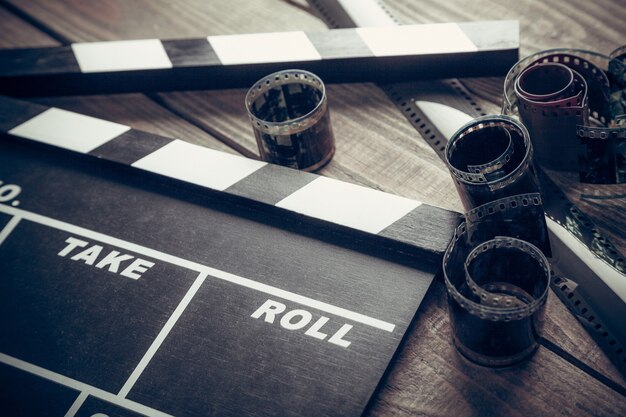
Key Responsibilities & Essential Masterpieces 1. 'The 400 Blows' (*Les Quatre-Cents Coups*, 1959) – Directed by François Truffaut, this semi-autobiographical masterpiece launched the movement, capturing youthful alienation through the eyes of runaway adolescent Antoine Doinel. 2. 'Breathless' (*À bout de souffle*, 1960) – Directed by Jean-Luc Godard, this iconic film shattered traditional editing rules by introducing revolutionary jump cuts, handheld camera work, and direct-to-camera character glances. 3. 'Jules and Jim' (*Jules et Jim*, 1962) – Truffaut’s dazzling lyrical romance explores a bohemian love triangle across World War I, utilizing rapid editing, freeze frames, and voiceover narration. 4. 'Cléo from 5 to 7' (*Cléo de 5 à 7*, 1962) – Directed by Agnès Varda (a key female voice of the movement), this real-time feminist masterpiece tracks a pop singer awaiting biopsy results in Paris. 5. 'Band of Outsiders' (*Bande à part*, 1964) – Godard’s playful genre subversion blends crime fiction with youthful charm, featuring the legendary impromptu dance sequence in a Parisian café.
Essential Skills & Revolutionary Techniques The French New Wave permanently changed cinematic grammar. Because these directors operated on tiny budgets outside major studios, they pioneered guerrilla filmmaking techniques: shooting on actual Parisian streets with portable hand-held 35mm cameras (such as the lightweight Éclair Coutant), utilizing natural available lighting, hiring non-professional actors or friends, and employing abrupt jump cuts that discarded seamless continuity editing.
Tools & Technologies (Lightweight Cameras & Sound) The technological catalyst for the movement was the development of lightweight portable cameras and synchronized magnetic tape sound recorders. Directors could now record direct-to-location dialogue without bulky sound booths, capturing spontaneous street conversations and improvisational dialogue that felt radically authentic and modern.
How to Get Started (Viewing Sequence) Beginners can start with François Truffaut’s 'The 400 Blows,' which offers an emotional, accessible narrative entry point. Follow this with Jean-Luc Godard’s 'Breathless' to experience the radical stylistic shockwaves that broke traditional Hollywood editing rules once and for all.
Portfolio & Practice (Cultural Impact) The ripple effects of the French New Wave transformed global cinema. It directly inspired the American New Hollywood movement of the 1970s (influencing directors like Martin Scorsese, Quentin Tarantino, and Francis Ford Coppola), proving that personal vision, artistic independence, and low budgets can produce timeless art.
Career Development & Archival Preservation Cinematheque Française in Paris and global home video distributors like The Criterion Collection play an invaluable role in restoring French New Wave prints. Their work ensures that Godard, Truffaut, and Varda’s bold cinematic experiments remain vibrant and accessible for contemporary students of film.
Learning Resources & Further Reading Aspiring film historians can read David Bordwell and Kristin Thompson’s 'Film History: An Introduction' or consult Antoine de Baecque’s definitive biography of the French New Wave movement. These texts provide rich context on how Parisian film criticism birthed a global cinematic revolution.
Golden Rift reads this work as part of a wider conversation about how cinema teaches us to look. The film’s achievement is not only its premise or its most memorable scene, but the way separate choices reinforce one another: performance creates pressure, editing controls discovery, sound gives images a physical afterlife, and production design turns an abstract argument into a place we can enter. That relationship between form and meaning is why the title remains useful for discussion beyond its release cycle. It invites comparison, disagreement, and a second viewing rather than a single verdict.
This essay is intended as an editorial guide, not a substitute for the film itself or for specialist historical research. Dates, awards, creative credits, and production details should be checked against primary records and reputable archives when used for academic or professional work. Our reference trail is included so readers can continue their own investigation. We value uncertainty where the evidence is incomplete, and we distinguish interpretation from fact. That distinction is central to responsible criticism: a persuasive reading should open a film up, never pretend to close it down.
Primary reference & further reading
This entry was supplied with the Golden Rift editorial archive. Use the credited source as a starting point for verification, then consult official film archives, published interviews, books, and restoration notes for deeper research.
Visit the cited reference ↗